28 Jun 2026
Biometric Authentication Patterns Reshaping Credit Approvals in Global Digital Marketplaces
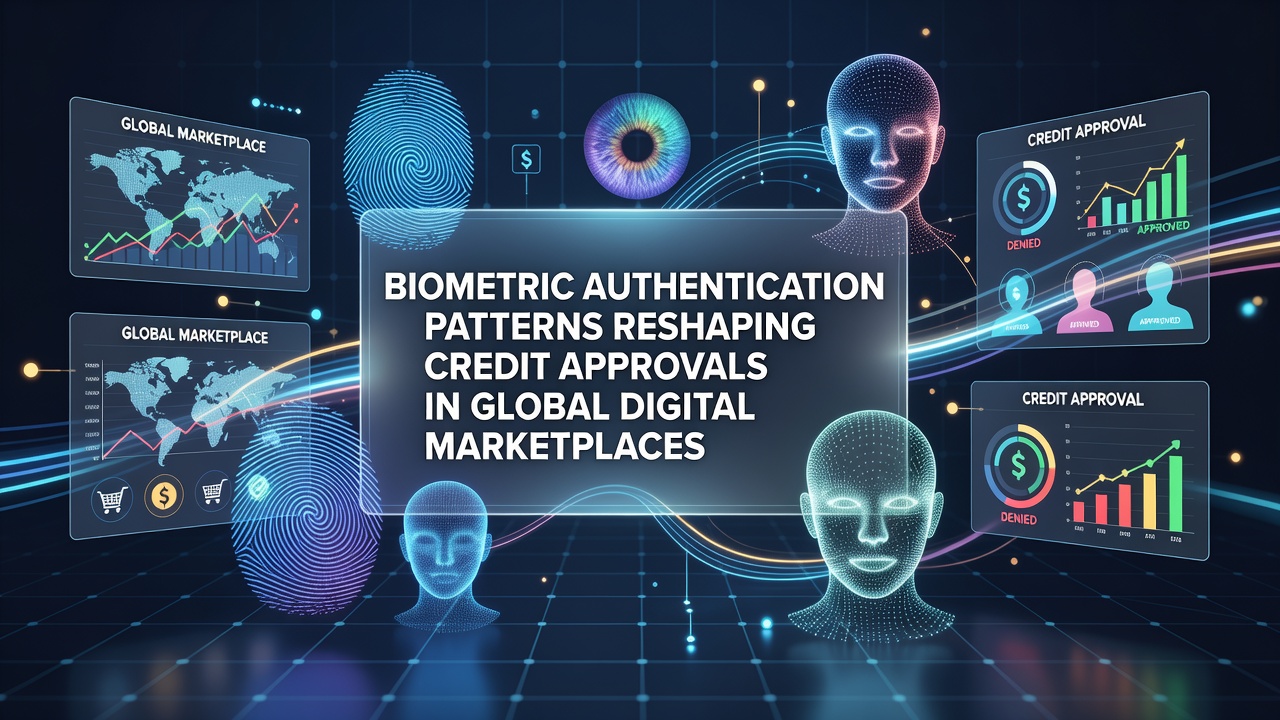
Biometric authentication has moved beyond simple login tools and into core credit decision processes across international digital marketplaces, where facial recognition, fingerprint scans, and voice patterns now feed directly into approval algorithms. These systems cross-reference live biometric data with stored identity profiles to verify applicants in seconds rather than days, which changes how platforms evaluate risk for loans, buy-now-pay-later options, and merchant financing. Data from multiple markets shows adoption rates climbing steadily through 2025 and into 2026, driven by integration between payment gateways and credit bureaus that accept biometric signals as primary verification inputs.
Global Implementation Patterns
Marketplaces operating across borders have adopted different biometric combinations depending on local regulations and infrastructure, yet the underlying shift remains consistent: credit lines open faster when identity confirmation relies on physiological traits instead of document uploads alone. In the European Union, frameworks from the European Central Bank have encouraged standardized testing of facial and fingerprint methods for high-value transactions, while platforms in Southeast Asia combine palm-vein scans with device-based keystroke patterns to handle cross-border seller financing. Observers note that these variations create layered verification flows where one biometric match triggers a secondary check only if the risk score exceeds certain thresholds.
Research indicates that digital marketplaces handling recurring credit products report reduced manual review volumes after implementing biometric layers, because the technology flags mismatched identities before applications reach underwriting teams. One study of platform economies in 2025 found that approvals processed through biometric channels completed 40 percent quicker on average than those relying solely on traditional identification numbers and address verification. The same analysis highlighted that marketplaces serving vendors in multiple currencies benefit most, since biometric data travels independently of physical documents that often require translation or apostille services.
Data Integration and Risk Scoring
Credit models now ingest biometric confidence scores alongside traditional variables such as transaction history and repayment patterns, which produces composite risk profiles updated in real time. When a marketplace user applies for expanded credit, the system captures a facial scan, matches it against previously enrolled data, and adjusts the approval limit if the match exceeds 98 percent certainty while behavioral signals remain consistent. This approach allows platforms to extend financing to sellers who lack extensive credit histories yet demonstrate reliable identity through repeated biometric confirmations.

Figures from the Monetary Authority of Singapore reveal that local fintech platforms incorporating biometric authentication into credit pipelines saw a measurable uptick in approved merchant applications between late 2025 and June 2026, particularly among cross-border sellers using subscription-style invoicing. The data shows these approvals carried lower average default indicators when biometric continuity checks occurred at each billing cycle, suggesting that ongoing identity assurance correlates with steadier repayment behavior across international networks.
Regional Regulatory Influences
Regulatory bodies in different jurisdictions have shaped how biometric patterns enter credit workflows, creating both convergence and divergence in marketplace practices. Australian oversight through the Australian Securities and Investments Commission emphasizes consumer consent protocols before biometric data enters credit assessments, which has led platforms to offer granular opt-in toggles that still feed verified identity signals into risk engines. Canadian federal guidelines, meanwhile, focus on data localization requirements that affect how biometric templates move between North American and Asian servers during multi-market credit evaluations.
These regional rules influence technical architecture choices, yet the outcome for marketplaces remains similar: credit approvals become more automated while maintaining compliance checkpoints. Platforms that operate globally often maintain parallel verification paths, routing European applicants through one biometric standard and Asia-Pacific users through another, all while feeding results into a unified scoring model that treats the biometric match quality as a core input variable.
Technical Evolution in 2026
By June 2026, several major marketplaces had expanded biometric credit checks to include passive liveness detection that analyzes micro-movements during facial scans without requiring explicit user actions, which reduces friction during high-frequency financing requests from vendors managing inventory cycles. This passive layer works alongside active fingerprint or voice prompts when transaction values cross predefined thresholds, creating a graduated system that scales security with credit exposure.
Academic papers published in early 2026 from research groups at institutions studying digital finance document how these hybrid biometric flows affect approval rates across different merchant segments, noting that smaller vendors gain disproportionate access because the technology lowers the documentation burden that previously delayed credit line increases. The studies emphasize that accuracy depends on continuous template updates, since aging biometric data can introduce drift that marketplaces mitigate through periodic re-enrollment prompts tied to billing anniversaries.
Conclusion
Biometric authentication patterns continue to embed themselves deeper into credit approval sequences for global digital marketplaces, supported by evolving technical standards and region-specific regulatory approaches that collectively favor faster, identity-anchored decisions. The integration of live biometric signals with existing risk models produces measurable shifts in processing speed and approval accessibility, particularly for vendors operating across borders where traditional documentation creates delays. As platforms refine these systems through 2026 and beyond, the core mechanism remains the same: physiological verification serves as a reliable bridge between identity assurance and credit allocation in automated marketplace environments.