14 Jul 2026
Mapping Connections Between Real-Time Funding Approvals and Recurring Charge Mechanisms in API-Integrated Global Commerce Platforms
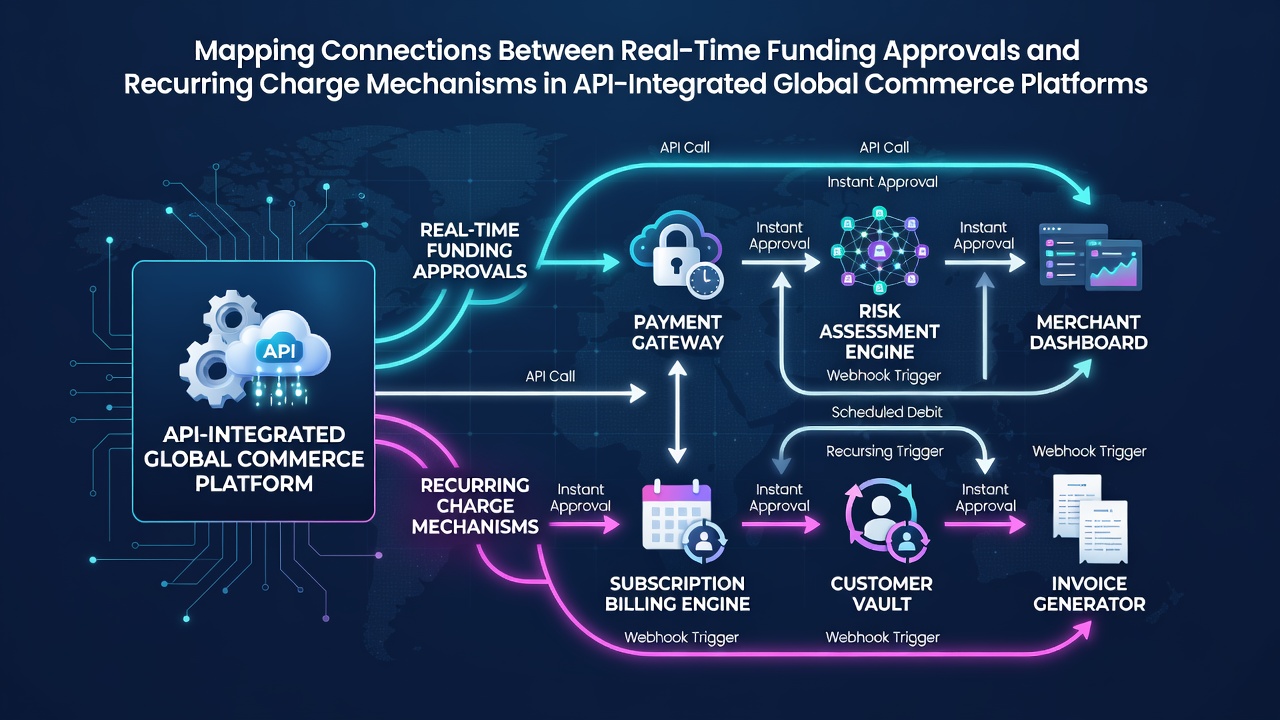 Real-time funding approvals operate through automated decision engines that evaluate merchant credit requests within seconds of submission, and these systems connect directly to recurring charge mechanisms via standardized APIs that handle subscription cycles across international borders. Data pathways link credit line activation with scheduled payment triggers so that approved funds become available for ongoing billing operations without manual intervention. In July 2026 the Bank for International Settlements published updated statistics on cross-border payment volumes, and those figures showed continued growth in API-mediated transactions that combine instant approvals with automated recurring collections. Platform operators maintain separate modules for credit assessment and billing execution, yet API endpoints synchronize the two processes by exchanging status updates, authorization tokens, and transaction records in structured formats. When a merchant submits a recurring invoice request the system first queries the real-time approval service to confirm available credit, then routes the charge through the billing engine once clearance is received. This sequence reduces latency between approval and collection while preserving audit trails for each step.
Core Components of Real-Time Funding Approvals
Funding approval engines pull data from multiple sources including bank records, transaction histories, and third-party credit bureaus before issuing a decision. APIs expose these engines to commerce platforms so that merchants in different regions can request credit lines without local infrastructure. The approval response contains parameters such as maximum amount, validity period, and interest rate that the billing system later references during charge creation.
Mechanics of Recurring Charge Execution
Recurring charge mechanisms rely on stored payment credentials and predefined schedules to initiate debits at regular intervals. Integration points allow the billing layer to reference live credit limits rather than static card details, which means charges succeed only when the approval service confirms sufficient headroom. Error handling routines within the API layer log declined attempts and trigger notifications that prompt merchants to adjust limits or update financing arrangements.
Data Synchronization Across Global Networks
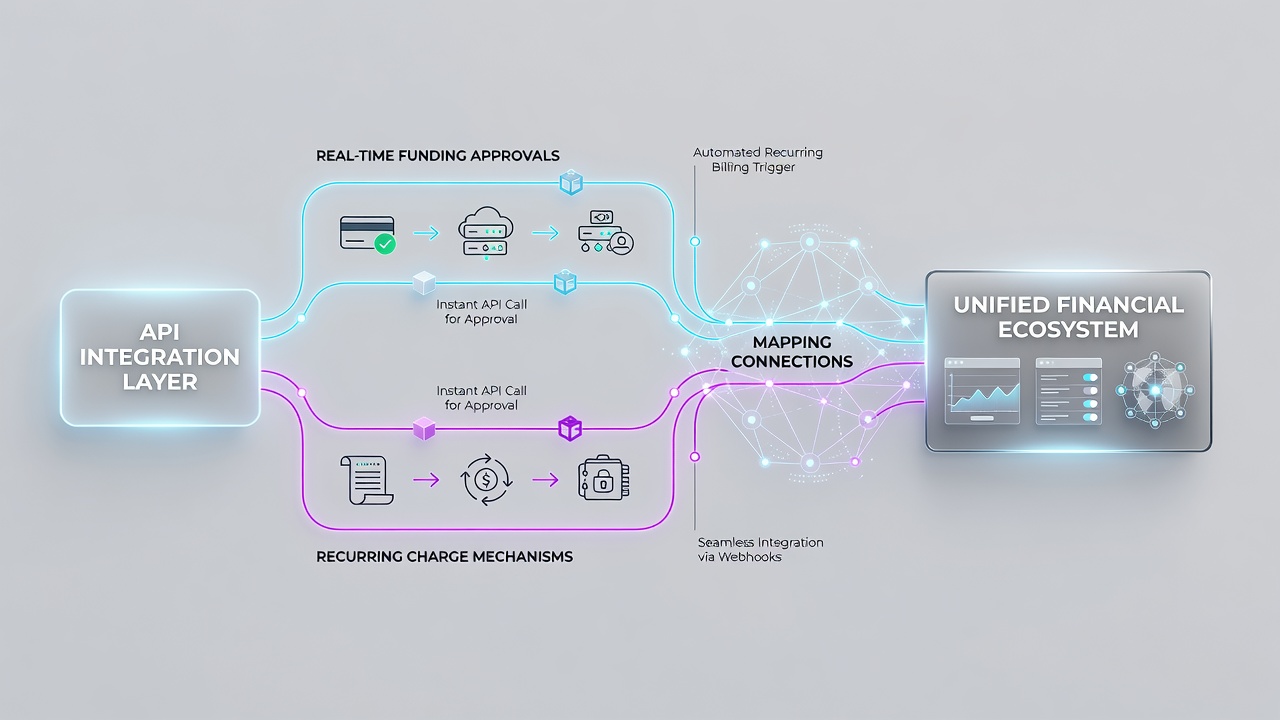 Observers note that synchronization occurs through event-driven webhooks and scheduled reconciliation jobs that compare approval states against billing outcomes. When a credit line is expanded or reduced the change propagates to the recurring engine within the same API session, preventing mismatches that could result in failed collections. Regional variations in data privacy rules require platforms to implement conditional routing so that sensitive credit information stays within compliant jurisdictions while still supporting global billing operations.
Examples of Integrated Workflows
Take one enterprise marketplace that processes thousands of vendor subscriptions each month; its API stack first obtains real-time funding approval for each vendor's credit facility, then schedules recurring charges that draw against those facilities on invoice dates. Another case involves a SaaS provider serving clients across multiple continents, where the system checks credit availability in the vendor's local currency before converting and applying the recurring fee through the same API call. These workflows demonstrate how approval data directly informs billing logic without intermediate human review.
Security and Compliance Layers
Tokenization services sit between the approval and billing modules so that actual account numbers never traverse the recurring charge path. Compliance frameworks from the European Central Bank and the Monetary Authority of Singapore require platforms to maintain separate audit logs for credit decisions adn payment executions, which API integrations satisfy by attaching unique reference identifiers to each transaction record. Encryption standards applied at the API level protect both approval requests and subsequent charge instructions during transmission.
Operational Metrics and Platform Performance
Industry reports indicate that platforms using tightly coupled approval and billing APIs achieve higher successful collection rates compared with decoupled systems. Metrics tracked include approval-to-charge latency, retry success after credit adjustments, and the percentage of recurring invoices that complete without manual intervention. These indicators help operators identify bottlenecks where approval rules and billing schedules fall out of alignment.
Conclusion
Connections between real-time funding approvals and recurring charge mechanisms depend on precise API mappings that carry credit parameters into billing logic while maintaining security and regulatory compliance. Continued expansion of global commerce platforms relies on these integrated pathways to support seamless subscription operations across diverse markets. Data from multiple regulatory bodies and research institutions continues to document the technical and operational patterns that define this intersection.