2 Jul 2026
Navigating Verification Protocols to Support Credit Extensions in Supply Network Transactions
 Supply networks rely on credit extensions to keep goods moving between manufacturers, distributors, and retailers, yet every extension requires verification protocols that confirm the reliability of each participant before funds or terms are approved. These protocols combine identity checks, financial health assessments, and transaction history reviews, all processed through interconnected systems that link suppliers across multiple regions.
Core Components of Verification in Supply Chains
Verification begins with standardized identity confirmation that pulls data from government registries, corporate filings, and third-party databases to establish that a company exists and operates legitimately, while financial assessments examine balance sheets, cash flow statements, and credit ratings supplied by reporting agencies. Transaction monitoring then layers on patterns from previous trades, including payment timeliness and order volumes, to flag any deviations that might signal risk. Data shows that integrated platforms handling these steps reduce approval times from days to hours in many documented supply arrangements.
Real-time data feeds from banking partners allow continuous updates rather than static snapshots, which proves especially useful when currency fluctuations or sudden market shifts affect a buyer's ability to repay. Observers note that systems incorporating machine learning models can adjust risk scores dynamically as new invoices or shipments appear in the network.
Integration Across International Platforms
Supply networks often span borders, which means verification protocols must accommodate differing regulatory requirements such as those outlined by the European Central Bank for trade finance documentation and the reporting standards maintained by the Federal Reserve for cross-border exposures. Automated interfaces translate data formats between jurisdictions so that a supplier in one country can receive credit terms based on verified information from a buyer elsewhere without manual re-entry of details.
July 2026 marks a period when several platforms introduced enhanced API connections that synchronize verification results across ERP systems used by mid-sized manufacturers, allowing credit decisions to incorporate live inventory levels and pending receivables in a single workflow. Researchers at institutions studying global trade have documented how these connections lower the incidence of mismatched records that previously delayed extensions.
Protocol Layers and Their Sequencing
Initial screening applies basic compliance filters to exclude entities on restricted lists, after which deeper analysis evaluates solvency through ratio calculations drawn from audited statements. Subsequent stages review supply-specific indicators such as supplier concentration and delivery performance metrics that influence the probability of timely repayment. When all layers align within acceptable thresholds, the system releases credit terms that may include staggered payment schedules tied to confirmed shipment milestones.
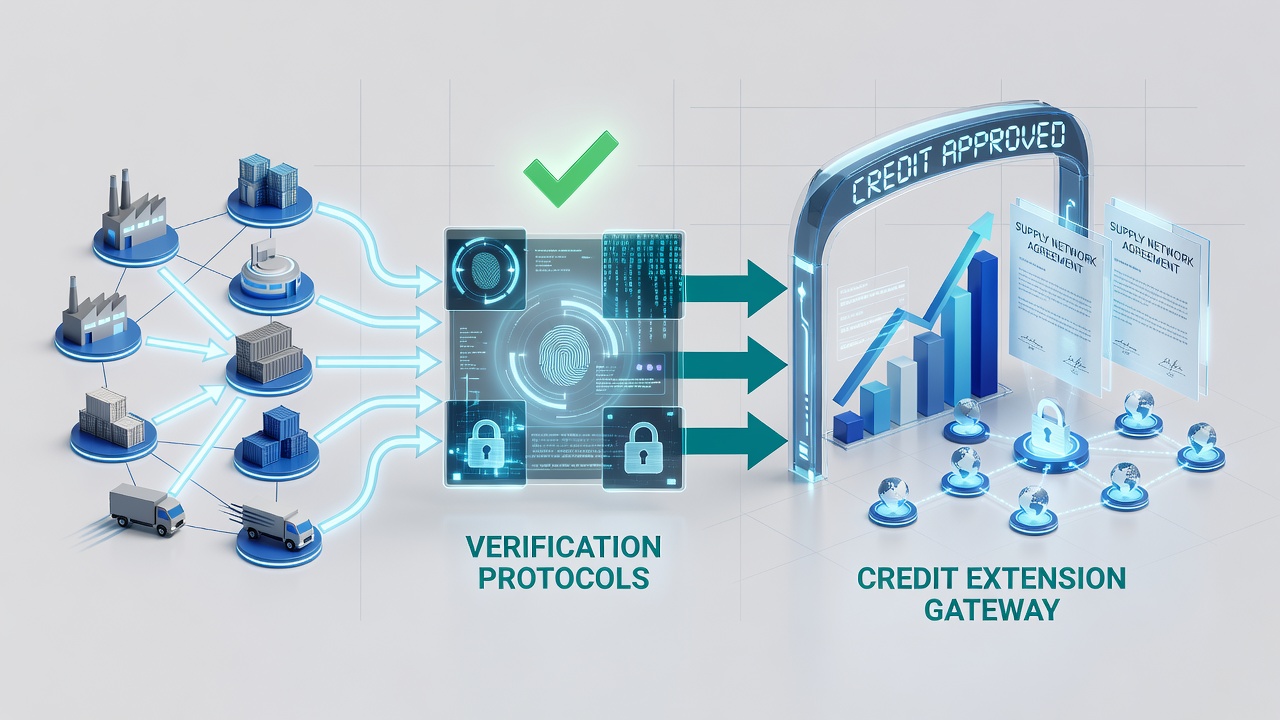
Multi-layered approaches allow organizations to scale verification intensity based on transaction size, so smaller routine orders pass through abbreviated checks while larger extensions trigger full reviews that include site visits or third-party audits. Those who've studied these implementations report that tiered protocols maintain throughput without sacrificing oversight on material exposures.
Data Pathways and Error Reduction
Verification relies on secure data pathways that encrypt information during transfer between banks, credit bureaus, and network participants, reducing the chance of interception or alteration. Redundancy built into these pathways ensures that if one source experiences downtime, alternate feeds maintain continuity for ongoing credit assessments. Evidence from industry reports indicates that such redundancy has contributed to fewer interruptions in credit lines during peak trading seasons.
Automated reconciliation tools compare incoming verification outputs against historical benchmarks stored in shared ledgers, highlighting anomalies for human review only when thresholds are exceeded. This selective escalation keeps operational teams focused on genuine exceptions rather than routine confirmations.
Future Adjustments in Protocol Design
Protocol designers continue to incorporate feedback from actual transaction outcomes to refine scoring models, incorporating variables such as geopolitical events or commodity price swings that affect repayment capacity. Collaborative pilots between logistics providers and financial institutions test whether shared visibility into shipment tracking can serve as an additional verification input for credit extensions.
Conclusion
Effective navigation of verification protocols supports stable credit flows through supply networks by aligning identity, financial, and performance data into coherent approval sequences. As platforms evolve their integration capabilities, the emphasis remains on accurate, timely checks that enable extensions while containing exposure across international participants.