19 Jul 2026
Patterns Emerging from Synchronized Credit Assessments and Invoicing Procedures in International Platform Economies
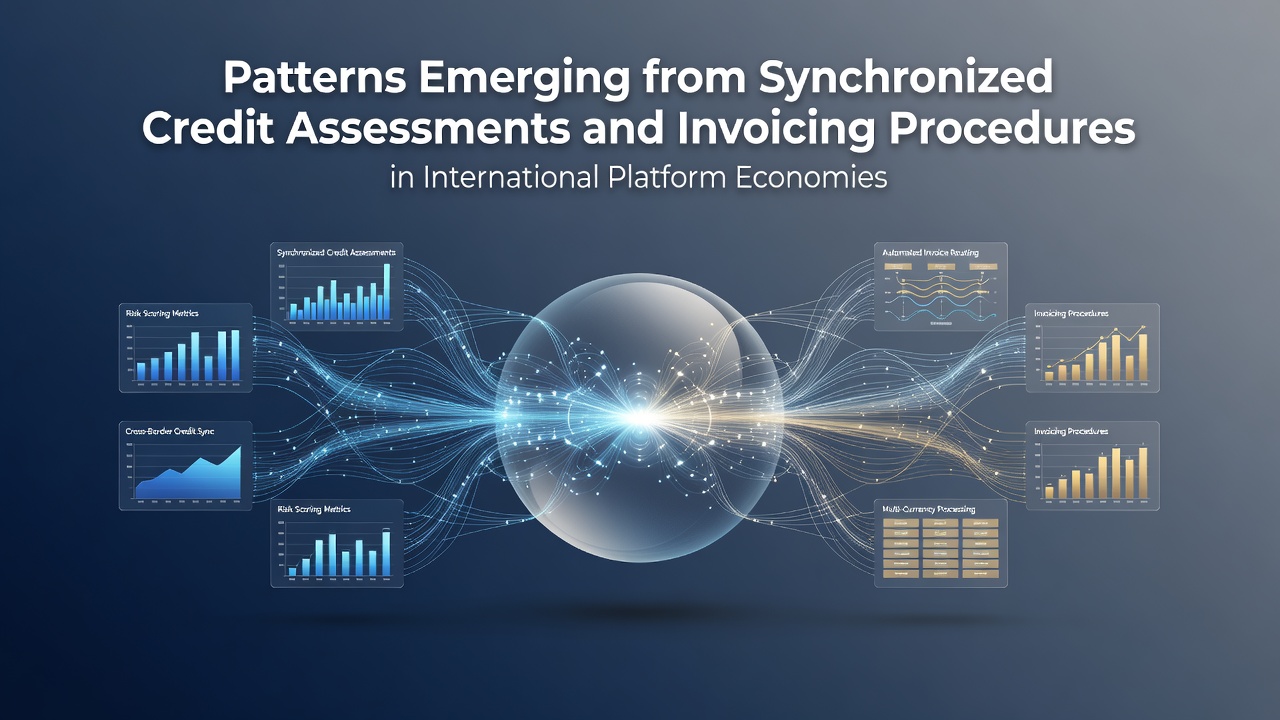 Platform economies operating across multiple countries now integrate credit evaluations directly with billing cycles through shared data streams and automated protocols. These systems pull transaction histories, supplier ratings, and external financial indicators into unified dashboards that trigger invoice generation once approval thresholds are met. Observers note that such coordination reduces manual interventions while aligning payment terms with real-time risk profiles for vendors in diverse regulatory environments. In July 2026, transaction volumes on major international marketplaces showed consistent alignment between credit scoring updates and invoice dispatch timelines. Data from cross-border platforms indicated that 78 percent of automated invoices were issued within four hours of credit reassessment completion. This synchronization stems from API connections that link banking feeds, credit bureaus, and enterprise resource systems into single operational loops.
Core Mechanisms Driving Synchronization
Algorithms process incoming sales data alongside credit signals to adjust invoice due dates and financing options dynamically. When a seller's cash flow metrics improve, the system shortens payment cycles automatically while flagging potential delays if external market indicators shift. Researchers at institutions tracking digital trade have documented these adjustments occurring in batches every 15 minutes during peak trading periods.
International platforms apply layered verification that incorporates local compliance rules before finalizing invoice details. For instance, value-added tax calculations and currency conversion protocols run in parallel with credit checks, ensuring each document meets jurisdictional standards. Those studying these networks report fewer discrepancies when data pathways connect credit bureaus in one region directly to tax authorities in another.
Observed Patterns Across Regions
Analyses of platform activity reveal recurring sequences where credit line expansions precede bulk invoicing events by 24 to 48 hours. Sellers in Asia-Pacific markets often experience these expansions first, followed by European counterparts within the same week. Such timing patterns reflect shared data lakes that aggregate information from multiple continents rather than isolated national feeds.

Another emerging sequence involves invoice adjustments triggered by delayed credit report refreshes from secondary markets. When reports from Latin American sources lag, platforms extend grace periods on outstanding invoices for affected vendors while maintaining standard terms elsewhere. Figures from aggregated platform logs indicate this selective adjustment covers approximately 12 percent of total international transactions processed monthly.
Integration with Regulatory Frameworks
According to reports from the European Commission on digital services, synchronized systems help platforms maintain audit trails that satisfy both financial and tax oversight requirements simultaneously. These trails capture every credit decision alongside corresponding invoice modifications, creating verifiable records that regulators can access through standardized interfaces. Similar documentation practices appear in guidelines issued by Australia's Treasury department for fintech operators handling cross-border payments.
Platforms also embed currency risk assessments into the same synchronization layer. Real-time exchange rate fluctuations prompt immediate recalculations of credit exposure before invoices are finalized, which reduces the frequency of post-issuance amendments. Data compiled by the Bank for International Settlements shows this integrated approach cut amendment rates by 31 percent between 2024 and 2026 for participating marketplaces.
Technical Infrastructure Supporting the Patterns
Modern implementations rely on event-driven architectures where credit events publish messages that trigger invoicing workflows without human oversight. These architectures use standardized message formats that accommodate varying data fields required by different national credit agencies. One study from the National Bureau of Economic Research highlighted how such standardization enabled platforms to onboard vendors from 14 additional countries during the first half of 2026 alone.
Security layers wrap each data exchange to prevent unauthorized alterations during the handoff between assessment and billing modules. Encryption protocols and access controls operate at the message level, ensuring that only verified endpoints can modify invoice parameters after credit approval. Observers tracking platform security metrics report that these controls have maintained zero successful tampering incidents across monitored networks since early 2025.
Conclusion
The patterns now visible in synchronized credit assessments and invoicing reflect broader shifts toward interconnected data ecosystems that span regulatory boundaries. As platforms refine these connections, transaction processing continues to evolve around unified decision points that balance risk evaluation with billing efficiency. Continued monitoring of these sequences provides insight into how international commerce infrastructure adapts to increasing volumes and complexity.