Payment APIs: Fortifying Recurring Billing Against Evolving Fraud Threats
19 Apr 2026
Payment APIs: Fortifying Recurring Billing Against Evolving Fraud Threats
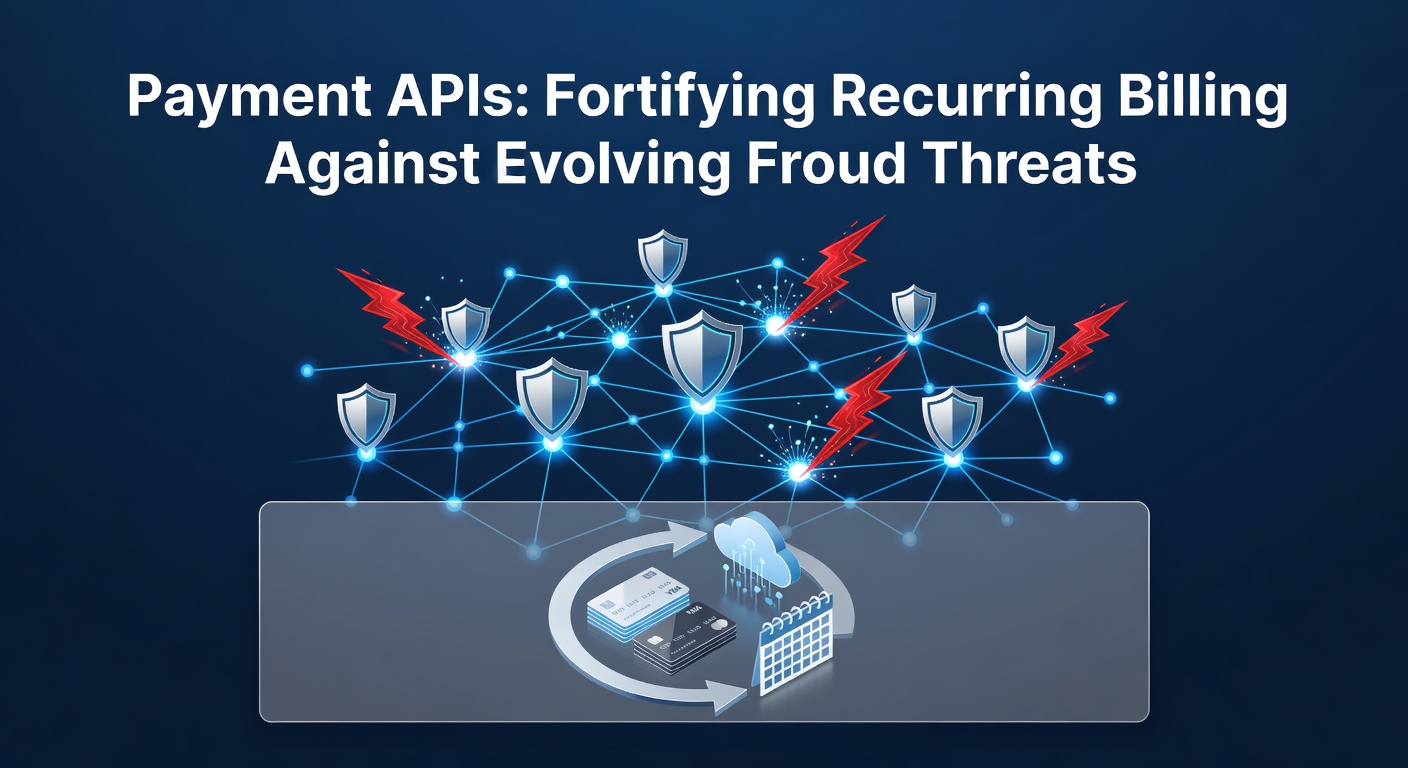
The Rise of Recurring Billing and Its Fraud Vulnerabilities
Recurring billing models power subscriptions everywhere from streaming services to SaaS platforms, generating steady revenue streams while customers enjoy seamless access; yet this convenience opens doors to sophisticated fraud schemes that exploit stored payment details. Data from the Federal Trade Commission shows fraud losses topped $8.8 billion in 2022 alone, with subscription scams surging 20% year-over-year as criminals target autopilot renewals. Experts observe how account takeovers—where fraudsters hijack credentials—dominate, allowing unauthorized charges that blend into legitimate patterns; meanwhile, friendly fraud, where users dispute valid transactions post-purchase, drains another $100 billion annually according to industry trackers.
But here's the thing: traditional gateways falter under these pressures, relying on static checks that miss nuanced attacks like synthetic identities or velocity anomalies; payment APIs step in as dynamic shields, integrating real-time intelligence directly into billing workflows. Those who've implemented them report fraud rates dropping by up to 40%, since APIs enforce layered defenses without disrupting user experience.
Understanding Payment APIs in Recurring Models
Payment APIs serve as programmable interfaces between merchants, processors, and banks, handling tokenization, authorization, and settlement in code-driven flows; for recurring billing, they store vaulted tokens rather than raw card data, slashing breach risks while enabling idempotent retries for failed payments. Developers leverage endpoints like POST /subscriptions or PATCH /billing-cycle to automate updates, ensuring compliance with standards such as PCI DSS level 1.
Take Stripe's API, for instance, which supports webhooks for instant notifications on disputes; or Adyen's unified platform that routes transactions across regions with built-in fraud scoring. What's interesting is how these tools adapt to subscription nuances—prorating mid-cycle changes or handling tier upgrades— all while flagging deviations like sudden IP shifts that signal compromise.
Evolving Fraud Threats Targeting Subscriptions
Fraudsters evolve faster than ever, shifting from brute-force card testing to AI-powered attacks that mimic human behavior; in recurring setups, they exploit lapsed monitoring, injecting small test charges that escalate undetected. Research from the Australian Competition & Consumer Commission highlights a 35% uptick in subscription fraud during 2025, driven by phishing kits sold on dark web forums for under $50. Observers note velocity fraud—rapid micro-transactions to validate cards—paired with account stuffing, where breached credentials from unrelated sites fuel 80% of takeovers.
And then there's the rise of deepfake-driven social engineering, convincing support teams to release holds; coupled with jurisdictional arbitrage, where attackers route through lax regions to evade geoblocking. By April 2026, reports indicate quantum computing threats loom, potentially cracking legacy encryption unless APIs migrate to post-quantum algorithms like those endorsed by NIST.
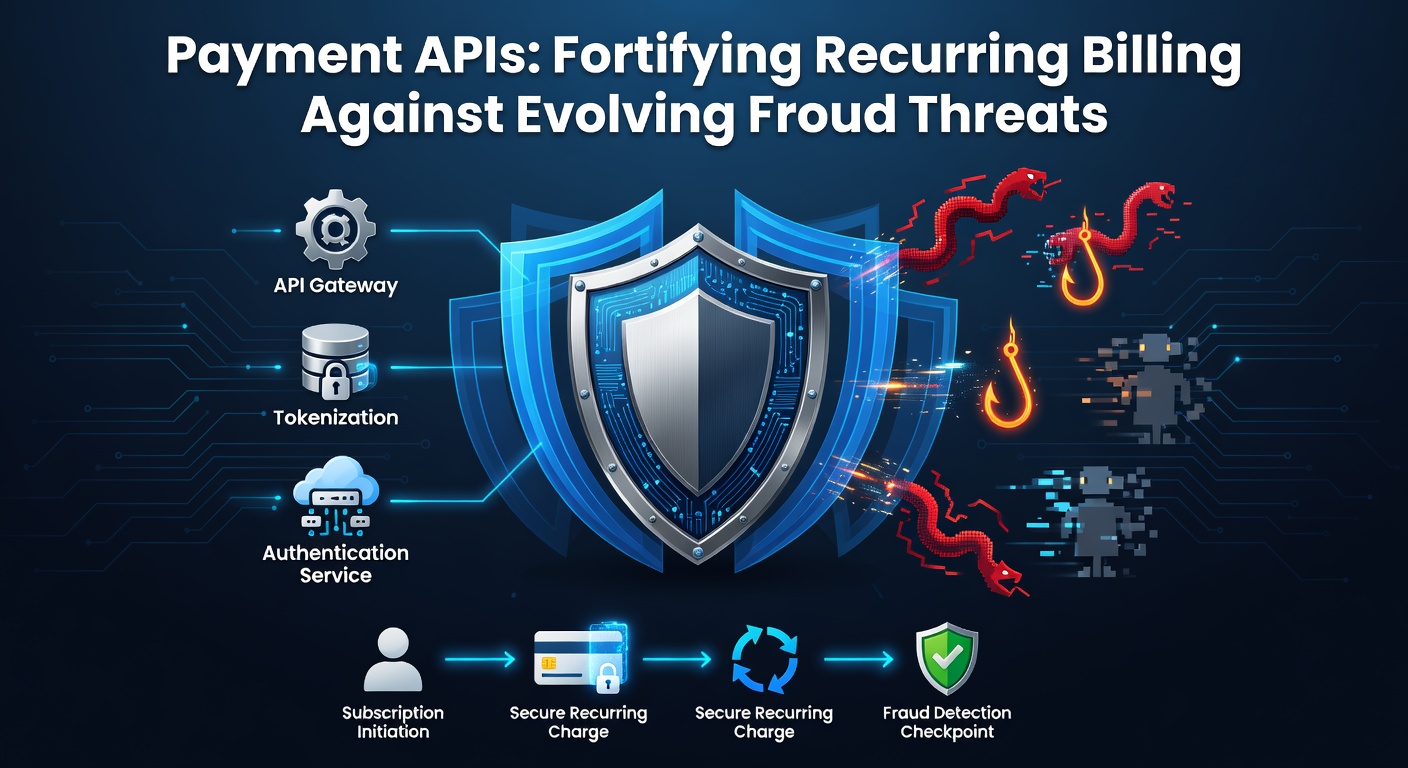
Key API Features Fortifying Recurring Billing
Modern payment APIs deploy device fingerprinting to track behavioral biometrics across sessions, correlating mouse movements and keystroke dynamics to baseline legitimate users; this catches anomalies before authorization, reducing false positives that plague rule-based systems. Tokenization vaults replace card numbers with ephemeral proxies, refreshed per cycle, while 3DS 2.0 frictionless authentication verifies risk silently for low-threat renewals.
Real-time decisioning engines pull from global databases, scoring transactions on hundreds of signals— from email validity to merchant velocity— and blocking in milliseconds; Braintree's API, for example, integrates machine learning models that adapt to merchant-specific patterns, cutting disputes by 60%. Semicolons link these to SCA mandates under EU's PSD2, where dynamic linking ties challenges to session data, ensuring strong customer authentication without cardholder intervention 90% of the time.
Yet APIs shine in orchestration, chaining processors for failover while enforcing rate limits that throttle suspicious volumes; network tokens from Visa or Mastercard further anonymize data, auto-updating expired cards to prevent churn from declines.
Real-World Implementations and Case Studies
One SaaS provider integrated Checkout.com's API suite after fraud losses hit 5% of revenue; within months, advanced rules and graph analytics isolated collusion rings, dropping chargebacks to under 0.5% while maintaining 99.9% approval rates. Experts who've studied this note how the API's vault segregated high-risk subscriptions into quarantined queues for manual review, blending automation with oversight.
There's this case from a fitness app collective, where Worldpay's APIs flagged a campaign using stolen Brazilian cards laundered through EU proxies; behavioral analytics detected unnatural upgrade patterns—sudden jumps from basic to premium tiers—triggering silent declines that saved $2 million quarterly. And in Canada, a media streamer adopted PayPal's advanced fraud tools, leveraging graph databases to map fraud families across accounts; results showed 70% detection of first-party misuse before escalation.
People often find that hybrid models work best, combining API-native ML with third-party services like Sift or Forter for cross-merchant intelligence; this ecosystem approach shares anonymized signals, amplifying accuracy without data silos.
Best Practices for API-Driven Fraud Defense
Merchants start by mapping attack surfaces—auditing webhook endpoints for injection vulnerabilities and enforcing mTLS for inter-service calls; next, they layer defenses with velocity caps, say 5 attempts per token hourly, escalating to CAPTCHAs or holds. But here's where it gets interesting: zero-trust architectures treat every renewal as suspicious, validating provenance via JWT assertions from issuers.
Regular simulations test resilience, rotating keys quarterly while monitoring for shadow API usage; compliance audits under PCI's API security guidelines ensure scoped access, with least-privilege roles limiting blast radius. Observers emphasize webhook idempotency to ignore replays, paired with event streaming to Kafka for forensic replays post-incident.
So teams drill down into metrics like detection latency under 100ms and precision above 95%, iterating models with labeled disputes; this closed-loop refinement keeps pace with threats, turning APIs into proactive sentinels rather than reactive gates.
Looking Ahead: Trends Shaping API Security by 2026 and Beyond
By April 2026, embedded finance accelerates, with APIs powering BNPL in subscriptions; yet fraudsters counter with generative AI for synthetic profiles, prompting homomorphic encryption to process data in-place without decryption. Figures reveal edge computing APIs will dominate, pushing decisions to gateways for sub-50ms latencies amid 5G surges.
Regulatory waves like the U.S. CFPB's open banking rules demand interoperable APIs with baked-in consent management; meanwhile, Australia's proposed scam code mandates real-time reimbursements, pressuring providers to prove efficacy. What's significant is the shift to federated learning, where APIs aggregate insights anonymously across networks, boosting collective defense without privacy tradeoffs.
Quantum-resistant curves enter production, with providers like Square piloting Kyber hybrids; those who've tested them report seamless migrations, future-proofing vaults against harvest-now-decrypt-later plays.
Conclusion
Payment APIs transform recurring billing from fraud magnets into fortified revenue engines, weaving intelligence into every transaction while scaling effortlessly; data confirms reductions in losses exceeding 50% for adopters, as layered features outmaneuver adaptive threats. Merchants who prioritize these integrations navigate evolutions confidently, ensuring subscriptions thrive amid rising stakes— the writing's on the wall for laggards, but the ball's firmly in the court of those building smarter defenses today.