Shifts in Credit Line Approvals Through Layered Gateway Analytics for Recurring Merchant Invoices
Written by Logan Keller · Jul 23, 2026
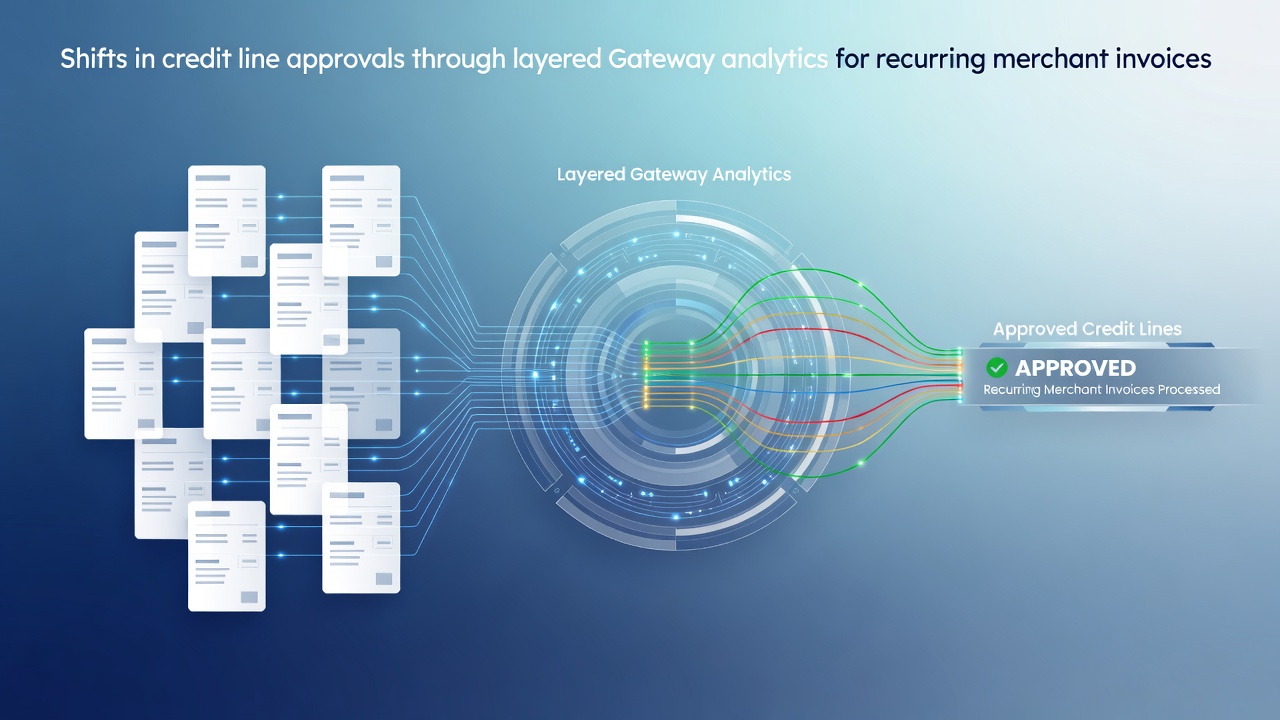
Shifts in Credit Line Approvals Through Layered Gateway Analytics for Recurring Merchant Invoices
Payment gateways now apply multiple analytical layers to evaluate credit line approvals for merchants handling recurring invoices, and this approach has altered how financial institutions assess ongoing risk exposure. Data from transaction networks shows that approvals increasingly depend on real-time aggregation of merchant performance metrics, customer retention patterns, and historical chargeback rates rather than static credit scores alone.
Layered systems combine fraud detection signals with credit utilization forecasts, allowing processors to adjust limits dynamically as invoice cycles repeat. In July 2026 several payment platforms reported measurable changes in approval volumes after implementing these combined checks across subscription-based merchant accounts.
Core Components of Layered Gateway Analytics
Gateway providers structure their analytics in sequential stages that examine incoming invoice data against multiple risk vectors at once. The first layer typically validates basic transaction details while the second reviews behavioral signals drawn from prior billing periods, and a third layer applies predictive models that estimate future cash flow stability based on payment success rates. Merchants who process recurring invoices through these gateways see their credit lines recalibrated when any layer detects deviations from established patterns.
According to Federal Reserve analyses of commercial payment systems, such multi-stage verification has reduced instances where credit extensions exceeded actual repayment capacity among high-volume subscription merchants. The approach connects invoice frequency data directly to credit decision engines, creating tighter alignment between expected revenue and approved borrowing amounts.
Effects on Approval Volumes and Timing
Approval rates for credit facilities tied to recurring merchant invoices have shifted noticeably since layered analytics became standard in major gateway platforms. Institutions now require merchants to demonstrate consistent collection performance across at least three billing cycles before expanding limits, whereas earlier processes often relied on single-point credit checks. This change has lengthened the average time from application to funding while simultaneously lowering default correlations in portfolios that use the same gateways.
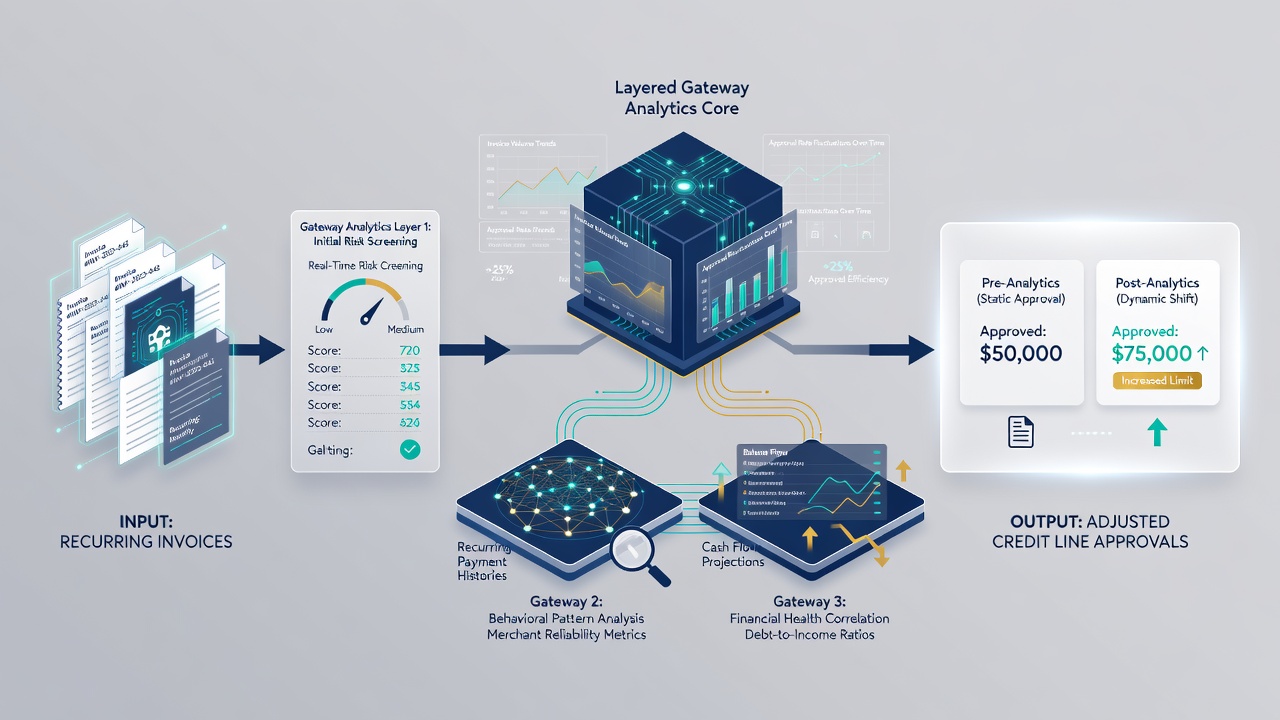
One study of platform-based sellers revealed that gateways incorporating customer churn indicators into credit models approved 18 percent fewer expansion requests during periods of elevated subscription cancellations. At the same time, merchants maintaining stable retention metrics received incremental increases more frequently because the layered checks flagged lower projected risk. These adjustments occur automatically within the gateway infrastructure, reducing manual reviews while maintaining compliance documentation trails.
Integration With International Merchant Networks
Cross-border recurring billing introduces additional variables that layered analytics address through region-specific data feeds. Gateways now pull currency fluctuation indicators and local regulatory compliance scores into the same decision pipeline used for credit line calculations. European Central Bank reports on payment innovation note that merchants operating across multiple jurisdictions experience faster credit adjustments when gateways synchronize these external signals with internal billing histories.
Merchants in digital marketplaces have observed that approval decisions increasingly reference aggregated performance across all connected platforms rather than isolated invoice streams. This interconnected view helps identify concentration risks where a single market downturn could affect repayment across several recurring contracts simultaneously.
Future Trajectory of Analytical Layers
Continued refinement of gateway analytics points toward deeper incorporation of machine learning outputs that forecast invoice-level default probabilities before credit lines are adjusted. Industry reports indicate ongoing pilot programs that test whether adding supply-chain payment data from vendor networks can further refine approval accuracy for merchants reliant on recurring revenue. These developments build directly on existing layered frameworks already deployed in production environments.
Conclusion
Layered gateway analytics have redefined how credit line approvals respond to recurring merchant invoices by linking multiple data streams into unified decision processes. Financial institutions and payment processors continue to expand the variables included in each analytical stage, producing measurable shifts in both approval timing and volume across domestic and international merchant segments.