16 Jul 2026
Synchronized Data Exchanges and Their Influence on Credit Decisions in Recurring Transaction Platforms for International Vendors
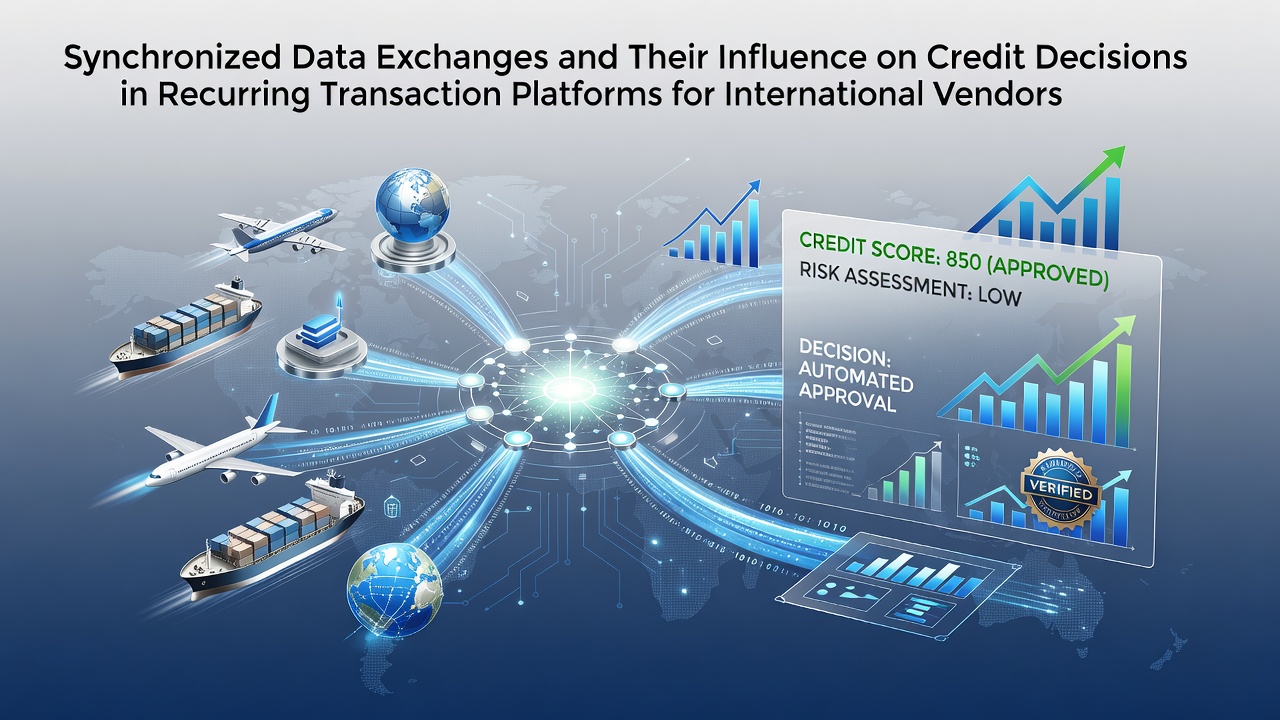
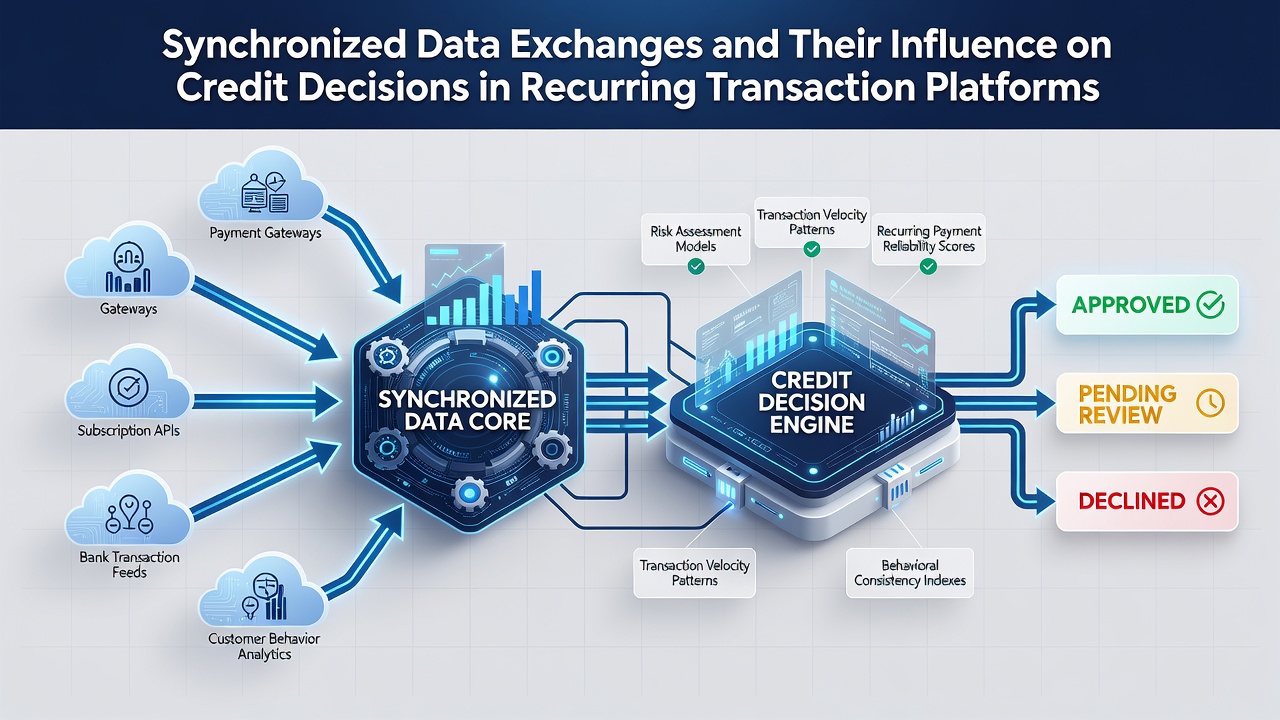
Recurring transaction platforms for international vendors depend on synchronized data exchanges to feed accurate, up-to-date information into credit evaluation models, and these exchanges allow credit providers to adjust decisions in near real time based on transaction patterns and vendor performance metrics. Data synchronization occurs when payment gateways, banks, and credit bureaus align their records through standardized APIs, which means credit decisions incorporate live revenue streams rather than outdated snapshots from monthly reports alone.
Mechanics of Data Synchronization in Recurring Platforms
Vendors who sell subscription services across multiple countries generate continuous transaction data that gets pushed into shared ledgers at fixed intervals, and this process enables credit systems to monitor cash flow consistency without waiting for end-of-cycle reconciliations. When synchronization protocols match timestamps and currency conversions across borders, algorithms can flag discrepancies that might otherwise delay credit line adjustments or trigger unnecessary reviews. Research from the Bank for International Settlements indicates that synchronized feeds reduce assessment latency by integrating point-of-sale records directly with credit scoring engines used by lenders serving global merchants.
International vendors often operate under varying regulatory regimes, so platforms must harmonize data formats to comply with local privacy rules while still supplying the granular details credit models require. And this alignment supports decisions such as extending additional working capital when recurring revenue streams demonstrate stability over successive billing cycles. Observers note that vendors in regions with high synchronization adoption see faster responses to credit inquiries because the underlying datasets remain current across all participating institutions.
Impact on Credit Decision Frameworks
Credit decisions shift when synchronized exchanges deliver segmented views of revenue by geography and subscription tier, allowing lenders to differentiate between stable recurring income and one-time spikes that could distort risk profiles. Data shows that platforms incorporating these exchanges apply dynamic thresholds, which adjust approval limits based on the velocity and predictability of incoming payments rather than static historical averages. In July 2026 several cross-border networks reported expanded credit facilities for vendors whose synchronized records confirmed uninterrupted subscription renewals despite currency fluctuations in emerging markets.
Those who manage credit allocation for recurring platforms find that synchronized inputs improve the precision of default probability calculations, and this precision stems from the ability to correlate payment failures with external events such as regional economic shifts captured in real time. The result appears in lending terms that reflect actual operational resilience instead of broad sector assumptions. Experts at the Monetary Authority of Singapore have documented similar patterns in their analyses of API-linked billing ecosystems serving Southeast Asian merchants.
International Vendor Considerations
Vendors based in one jurisdiction yet serving customers worldwide encounter additional layers of complexity when data exchanges cross regulatory boundaries, and synchronization standards help maintain consistent credit signals despite differences in reporting frequencies or tax treatments. Platforms that enforce unified data schemas allow credit providers to evaluate the entire revenue portfolio rather than isolated local streams, which reduces the chance that incomplete information leads to overly conservative lending limits. Figures from the European Central Bank reveal that harmonized exchange protocols correlate with higher volumes of cross-border credit extended to subscription-based businesses operating in multiple currencies.
Security measures embedded in these exchanges include encryption and access controls that protect sensitive vendor and customer details during transit between systems. When international vendors integrate their billing software with synchronized networks, credit evaluations gain access to verified metrics such as churn rates and average revenue per user, metrics that directly inform decisions about financing for platform expansion or inventory scaling. People who oversee these integrations report smoother capital access once their transaction histories become visible through the shared infrastructure.
Technological Enablers and Regulatory Context
API frameworks form the backbone of synchronized exchanges, and they permit recurring platforms to push structured datasets at sub-second intervals without manual intervention. Credit models trained on these continuous feeds can detect early signs of revenue contraction across specific markets, prompting proactive adjustments to credit exposure before problems compound. Academic studies from the University of Melbourne have examined how such real-time linkages affect risk pricing in subscription-heavy industries serving Australian and Asian vendors.
Regulatory bodies in various regions encourage standardized synchronization practices to promote transparency in credit allocation, yet vendors must still navigate local requirements around data residency and consent management. This balance influences how quickly credit decisions can incorporate fresh transaction information while remaining compliant. Those managing international operations often prioritize platforms that embed compliance checks directly into the exchange process, which minimizes delays in credit reviews triggered by cross-border data flows.
Conclusion
Synchronized data exchanges continue to reshape credit decisions for international vendors on recurring transaction platforms by supplying continuous, verified inputs that reflect actual revenue performance across borders. As these systems mature, credit providers gain clearer visibility into subscription stability, enabling more responsive lending frameworks. The ongoing evolution of synchronization standards promises further refinement of risk assessment methods used in global commerce environments.